

Free Protein Calculator – How Much Protein Do You Need Per Day?
Use our free protein calculator to instantly estimate how much protein you need each day based on your weight, activity level, and goal — whether that’s losing weight, building muscle, or simply staying healthy. Results are shown in grams per day and work in both kg and lbs.
Protein needs depend on your body weight and how active you are, not on your height alone. If you also want to know your healthy weight range, try our BMI Calculator, and to see how protein fits into your overall daily energy needs, use our Calorie Calculator.
Protein Calculator
Find out how much protein you need each day based on your goal, activity, and age.
Daily Protein Intake Table (Grams Per Day by Weight and Goal)
The table below shows estimated daily protein ranges in grams, based on body weight and goal, so you can find a rough figure without entering anything. Values use widely cited protein-per-kilogram guidelines: around 0.8–1.0 g/kg for general health, 1.4–1.8 g/kg for active people and fat loss, and 1.6–2.0 g/kg for building muscle. The table covers weights from 50 kg to 110 kg (110 lbs to 242 lbs) and works for both men and women aged 18 and over.
| Body weight | General health0.8–1.0 g/kg | Fat loss / active1.4–1.8 g/kg | Build muscle1.6–2.0 g/kg |
|---|---|---|---|
| 50 kg 110 lb | 40–50 g | 70–90 g | 80–100 g |
| 60 kg 132 lb | 48–60 g | 84–108 g | 96–120 g |
| 70 kg 154 lb | 56–70 g | 98–126 g | 112–140 g |
| 80 kg 176 lb | 64–80 g | 112–144 g | 128–160 g |
| 90 kg 198 lb | 72–90 g | 126–162 g | 144–180 g |
| 100 kg 220 lb | 80–100 g | 140–180 g | 160–200 g |
| 110 kg 242 lb | 88–110 g | 154–198 g | 176–220 g |
Estimates for healthy adults, shown as ranges in grams per day. For reference only — not a substitute for advice from a doctor or registered dietitian. People training hard for muscle gain or fat loss may use up to 2.2 g/kg per day.
Sign up for the Healthy Protein newsletter, and we’ll send delicious, protein rich recipes straight to your inbox. Let’s crush our fitness goals together!
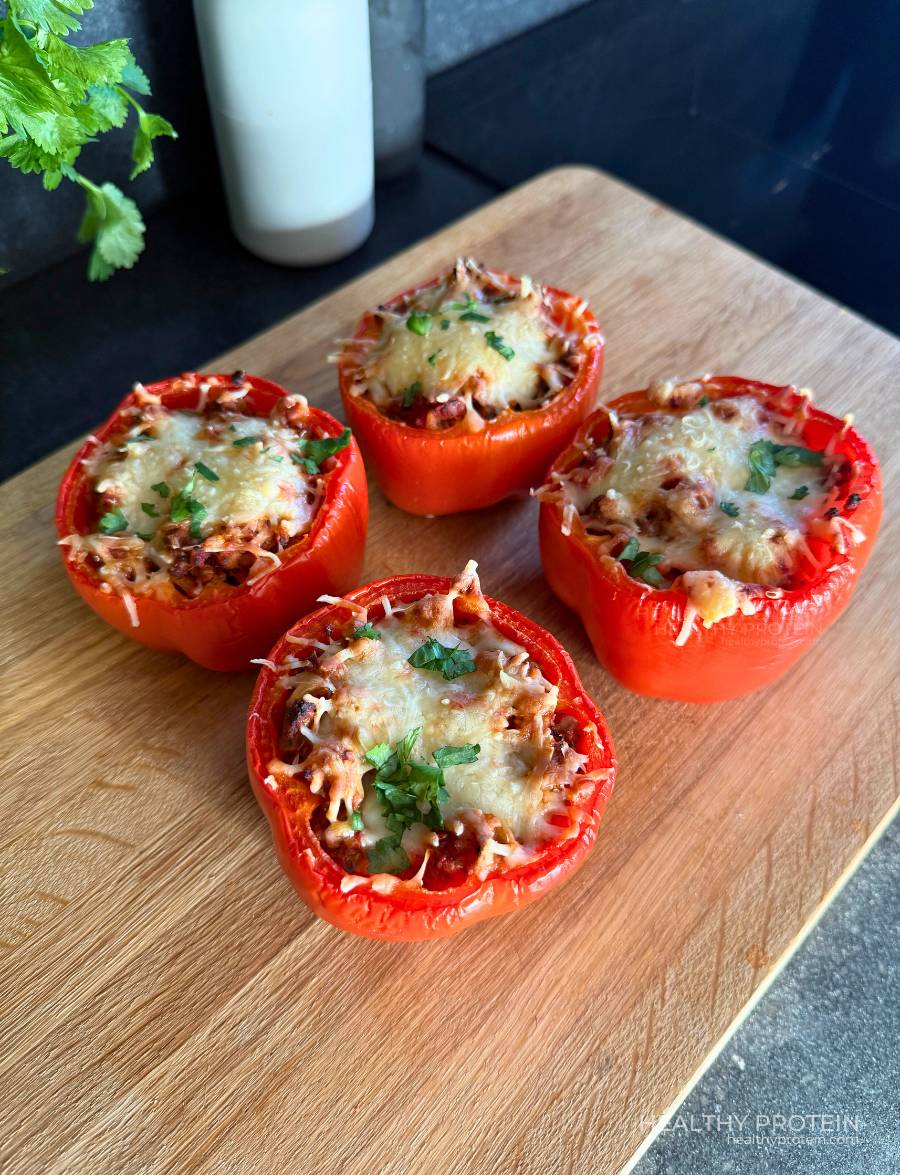
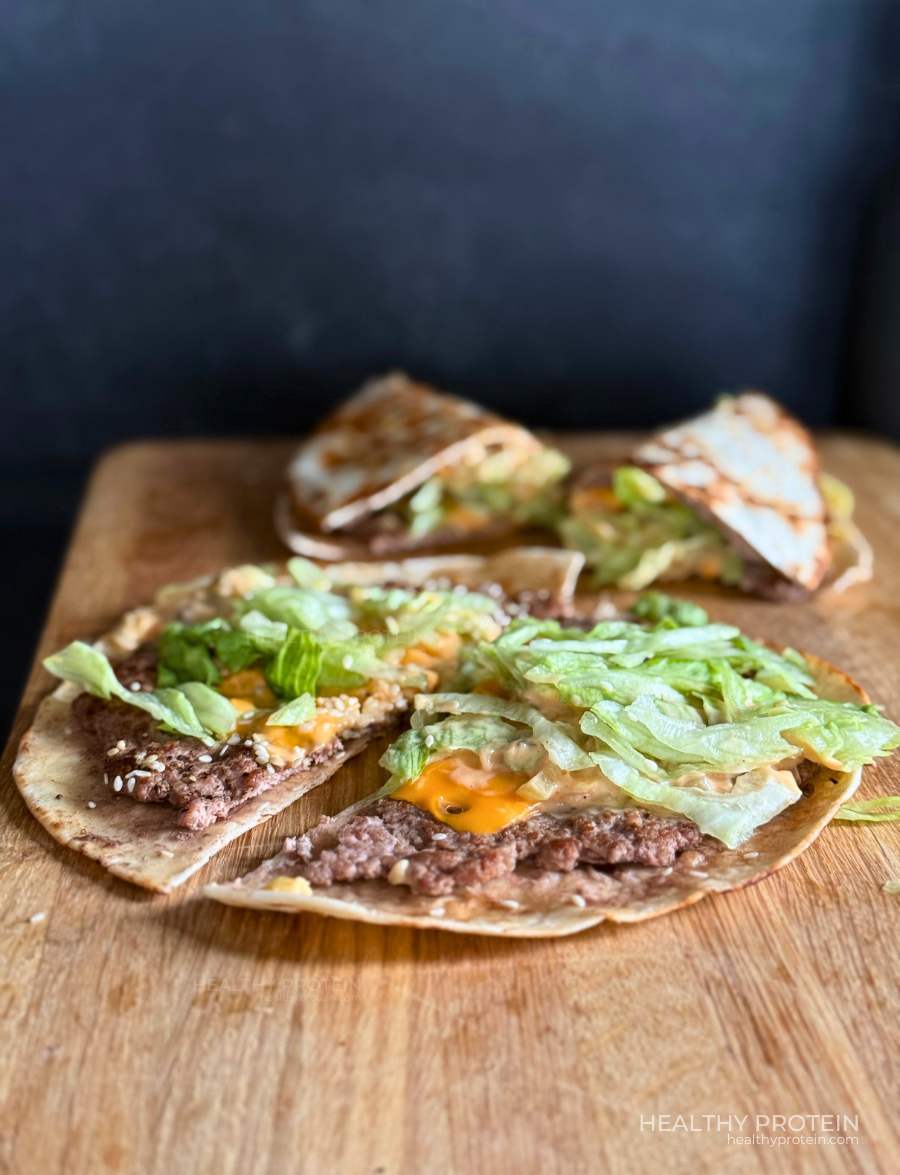
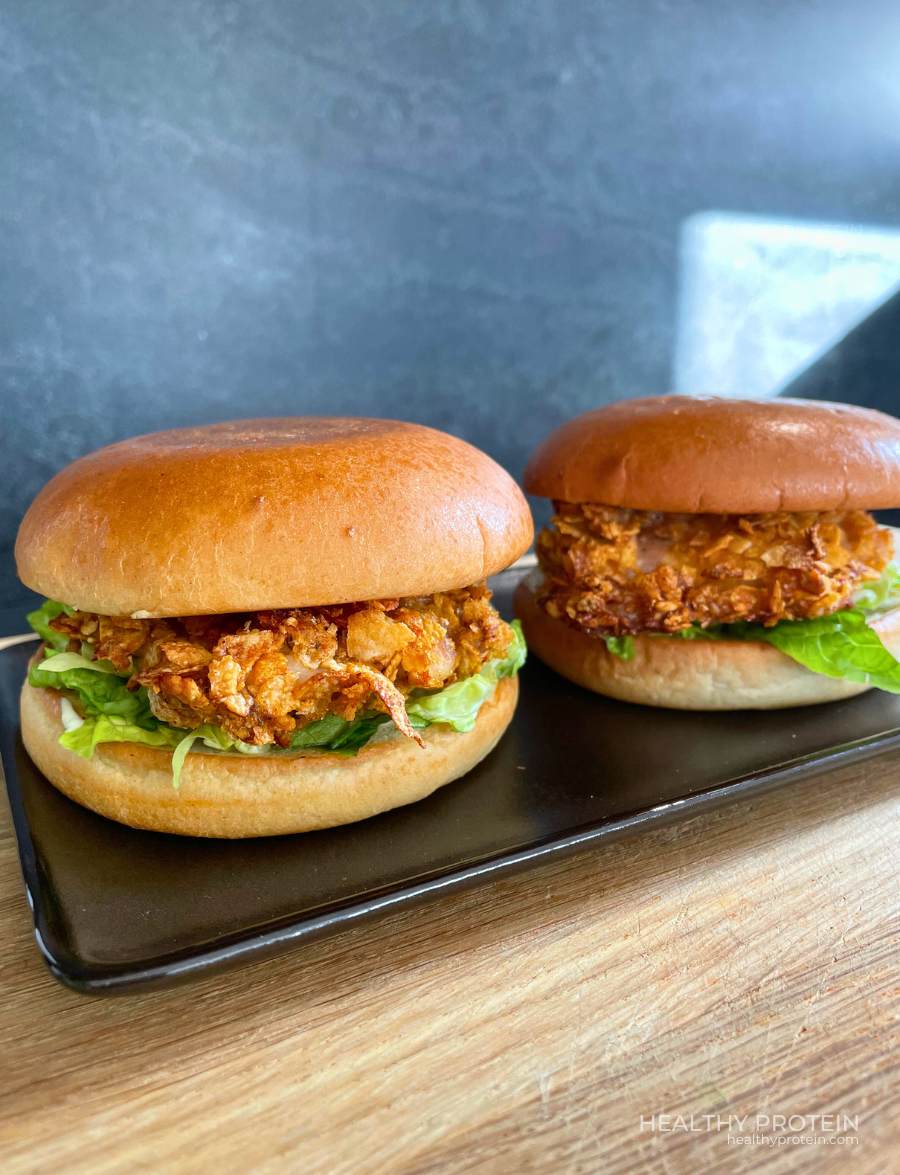
Find Your Next High-Protein Meal



How Much Protein Do You Need Per Day?
The right amount of protein depends on your body weight, age, activity level, and goals. Health authorities set a baseline: the European Food Safety Authority’s population reference intake for protein is 0.83 grams per kilogram of body weight per day, and the US Recommended Dietary Allowance (RDA) is 0.8 g/kg per day. Both represent the minimum needed to avoid deficiency in most healthy adults — not the amount that is optimal for fitness or body composition.
For people who exercise, that baseline is usually too low. The International Society of Sports Nutrition concludes that a daily intake of 1.4–2.0 g/kg is sufficient for most exercising individuals to build and maintain muscle. Higher intakes, in the region of 2.0–2.2 g/kg, are commonly used by people in a calorie deficit who want to preserve muscle while losing fat.
Our calculator applies these ranges automatically based on the goal, activity level, and age you enter, so you get a target tailored to your situation rather than a one-size-fits-all number. The public-facing target is capped at 2.2 g/kg per day.
How Is Protein Intake Calculated?
Protein needs are calculated by multiplying your reference body weight in kilograms by a protein factor (grams per kilogram) that reflects your goal, activity level, and age:
Daily protein (g) = Reference body weight (kg) × protein factor (g/kg)
Example: A person weighing 70 kg (154 lbs) who strength trains and wants to build muscle, using a factor of 1.6–2.0 g/kg:
70 × 1.6–2.0 = 112–140 g of protein per day
If they eat 4 meals a day, that’s roughly 28–35 g of protein per meal.
A Note on Body Weight and BMI
Recommended Protein Intake by Goal and Group
Different goals and life stages call for different amounts of protein. The following ranges match how the calculator sets your target:
- General health / maintenance: 0.8–1.0 g/kg per day — the standard adult requirement for someone who does little or no exercise.
- Light activity: 1.0–1.2 g/kg per day.
- Regular exercise: 1.2–1.6 g/kg per day.
- Fat loss / weight loss: 1.4–1.8 g/kg per day, rising to 1.6–2.2 g/kg if you also train — a higher intake helps preserve muscle and keeps you feeling full while eating fewer calories.
- Building muscle / strength training: 1.6–2.0 g/kg per day, up to 2.2 g/kg with dedicated strength training — supports muscle protein synthesis and recovery.
- Endurance training: 1.2–1.8 g/kg per day.
- Older adults (65+) and healthy aging: 1.0–1.2 g/kg per day, or 1.2–1.6 g/kg if active — expert groups recommend more than the standard RDA to help protect against age-related muscle loss.
- Pregnancy: increased needs — pregnant women should follow guidance from their healthcare provider.
⚠️ These ranges are general guidance for healthy adults. They do not replace individual medical or dietary advice. People with kidney disease, in particular, may need to limit protein and should speak to their doctor.
Why Does Protein Matter?
Protein is one of the three macronutrients, alongside carbohydrates and fat, and it plays a central role in health. Getting enough protein each day helps your body:
- Build and repair muscle, especially important if you exercise or strength train.
- Preserve lean mass during weight loss, so more of the weight you lose comes from fat.
- Stay fuller for longer, since protein is the most satiating macronutrient and can help control appetite.
- Support bones, skin, hair, enzymes, and hormones, all of which rely on protein as a building block.
Spreading your protein across the day — for example, including a protein source at each meal rather than eating most of it at dinner — helps your body use it more effectively. That’s why the calculator also shows a per-meal figure based on how many meals you eat.
Is This Protein Calculator Accurate?
Our calculator gives a well-founded estimate, but it is a starting point, not a precise prescription. Real protein needs vary with muscle mass, training intensity, overall diet, and individual health conditions.
For a more complete picture, consider these alongside your calculated target:
- Your total daily calorie needs (see our Calorie Calculator)
- Your body composition and activity level
- The quality of your protein sources, not just the total grams
- Advice from a registered dietitian or doctor for any medical condition
The calculator works best as a practical guide you can adjust over time, rather than a fixed rule.
What Should I Do After Calculating My Protein Needs?
Your protein target is a useful starting point for planning meals that support your goal. If you’re aiming to build muscle or lose fat, the next step is making sure your meals actually hit that number — which is easier with high-protein foods you enjoy.
Browse our high-protein recipes for meals that show exactly how many grams of protein (and how many calories) each one contains, so you can build a day that meets your target without guesswork.
If your goal also involves losing, maintaining, or gaining weight overall, our Calorie Calculator will estimate your daily calorie needs — the natural next step after working out your protein.
Does protein intake affect how many calories I need?
Frequently Asked Questions
Common questions about protein intake, how much you need, and what your result means.
For most healthy adults the baseline is about 0.8–1.0 grams of protein per kilogram of body weight per day. Active people, those losing weight, and those building muscle generally need more — commonly 1.2 to 2.2 g/kg depending on their goal and training. The protein calculator above works out a personalised range for you based on your weight, age, activity level, and goal.
Protein needs are calculated by multiplying your body weight in kilograms by a protein factor (grams per kilogram) that reflects your goal, activity, and age. For example, a 70 kg person building muscle at 1.6–2.0 g/kg needs about 112–140 grams per day. For people with a BMI of 30 or above, the calculator uses an adjusted reference weight so the target isn't overestimated.
Research supports around 1.6 to 2.0 grams per kilogram of body weight per day for people who want to gain muscle, rising to about 2.2 g/kg with dedicated strength training. Protein works best alongside adequate calories and regular resistance exercise — spreading your intake across the day, with protein at each meal, helps your body use it more effectively.
A higher protein intake — roughly 1.4 to 1.8 g/kg per day, or up to 2.2 g/kg if you also train — helps preserve muscle and control appetite while you eat fewer calories, making it easier to lose fat rather than muscle. Because weight loss also depends on your overall energy balance, it helps to pair your protein target with your daily calorie needs using our free Calorie Calculator.
Protein needs are based on body weight, not sex, so the same grams-per-kilogram guidelines apply to women and men. Women simply tend to need fewer total grams because they usually weigh less on average. The calculator uses your actual weight, so it gives an appropriate target regardless of sex.
Expert groups recommend that adults over 65 aim for about 1.0 to 1.2 grams per kilogram of body weight per day — more than the standard adult RDA — rising to 1.2 to 1.6 g/kg if they are active or strength training. Getting enough protein in later life helps protect against age-related muscle loss and supports strength and mobility.
For healthy people, moderately high protein intakes are generally considered safe, which is why this calculator caps its target at 2.2 g/kg per day. People with kidney disease, liver disease, or other medical conditions — as well as those who are pregnant or breastfeeding — should follow their doctor's or dietitian's advice, as their needs may differ.
References
- European Food Safety Authority (EFSA). Scientific Opinion on Dietary Reference Values for protein. EFSA Journal, 2012. EFSA Scientific Opinion on protein
- Institute of Medicine (U.S.), Food and Nutrition Board. Dietary Reference Intakes: The Essential Guide to Nutrient Requirements. National Academies Press. Dietary Reference Intakes (National Academies)
- Jäger R, Kerksick CM, Campbell BI, et al. International Society of Sports Nutrition Position Stand: Protein and Exercise. Journal of the International Society of Sports Nutrition, 2017. ISSN Position Stand: Protein and Exercise
- Bauer J, Biolo G, Cederholm T, et al. Evidence-based recommendations for optimal dietary protein intake in older people: a position paper from the PROT-AGE Study Group. Journal of the American Medical Directors Association, 2013. PROT-AGE position paper
- Leidy HJ, Clifton PM, Astrup A, et al. The role of protein in weight loss and maintenance. American Journal of Clinical Nutrition, 2015. AJCN: Protein in weight loss and maintenance
- Harvard T.H. Chan School of Public Health. Protein — The Nutrition Source. Harvard Nutrition Source: Protein
