Cheesecake Recipe Ingredients
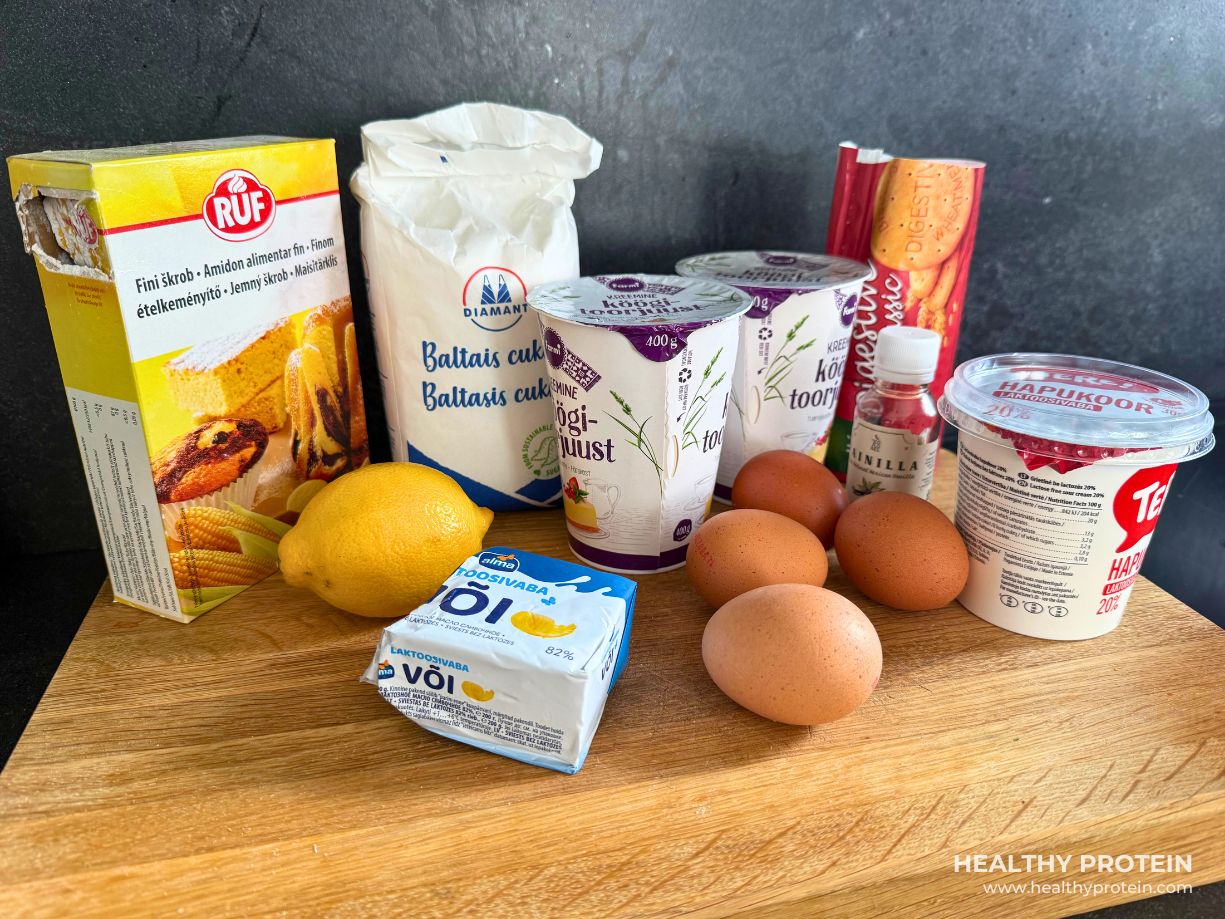
- Digestive biscuits – Graham crackers are often used for the crust in classic American cheesecakes, but digestive biscuits are an excellent alternative. They create a crisp base with a slightly caramelized flavor.
- Butter – Melted butter helps hold the biscuit crust together and adds a lovely richness. Sugar – You will need sugar for both the biscuit crust and the cream cheese filling.
- Cream cheese – Use plain, full-fat cream cheese for the rich, smooth filling that makes New York-style cheesecake so distinctive.
- Sour cream – Sour cream adds a gentle tang and makes the texture even creamier. Full-fat sour cream, around 20% fat, works best.
- Eggs – Eggs help the cheesecake filling set as it bakes. Cornstarch – A small amount of cornstarch helps the filling set and gives it a smooth, sliceable texture.
- Vanilla – Vanilla provides the familiar classic cheesecake flavor. Use vanilla extract, vanilla bean paste, or good-quality vanilla sugar.
- Lemon zest and juice – A little lemon adds freshness and a subtle citrus note to the filling.
- Salt – A pinch of salt brings out the sweetness and balances the flavors.
Optional:
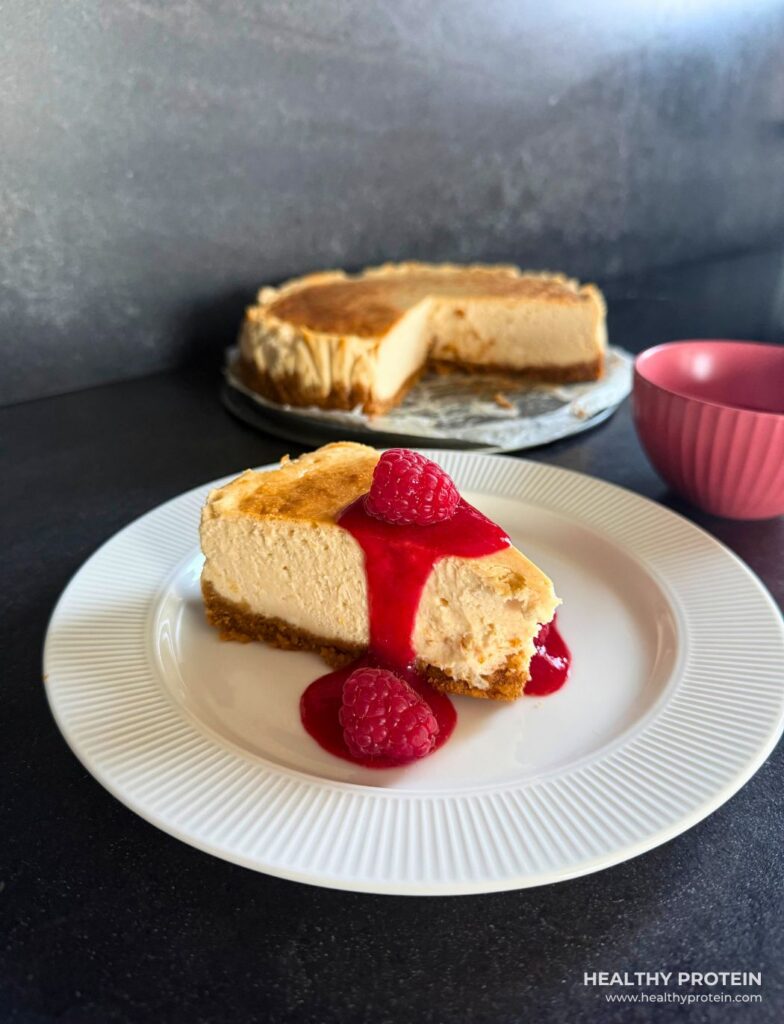
- Berry sauce – Strawberry, raspberry, or cherry sauce goes especially well with a classic New York-style cheesecake.
- Fresh berries – If you prefer not to make a sauce, simply serve it with fresh strawberries, raspberries, or blueberries.
How to Make New York-Style Cheesecake?
- Bring the ingredients to room temperature – Take the cream cheese, sour cream, and eggs out of the fridge at least 1–2 hours before baking. Cold ingredients do not combine as smoothly and can leave lumps in the filling.
- Choose the right cake pan – A 22 cm (about 9-inch) springform pan works best for this recipe. A 23–24 cm (9–9½-inch) pan will make a slightly shorter cake but also works well. Only use a 20 cm (8-inch) pan if it is tall enough to hold the filling without reaching the rim.
- Prepare the biscuit crust – Crush the digestive biscuits into fine crumbs using a food processor or a sealed bag. Mix in the sugar, a pinch of salt, and the melted butter. The mixture should resemble damp sand.
- Press the crust into the pan – Line the base of a 22 cm (about 9-inch) springform pan with parchment paper. Press the crumbs firmly across the bottom and slightly up the sides if you like. You can use your fingers, but the base of a glass or measuring cup makes this easier.
- Prebake the crust – Bake the crust in a preheated oven at 175 °C (350 °F) for about 10 minutes. This helps it hold together and gives it a crisper texture. Let the crust cool slightly while you prepare the filling.
- Prepare the pan for a water bath – Wrap the outside of the base and sides of the springform pan tightly in 2–3 layers of aluminum foil to keep the water out. A water bath is optional, but it helps the cheesecake bake evenly and develop a smooth, creamy texture.
- Beat the cream cheese until smooth – Place the room-temperature cream cheese in a large bowl and mix on low or medium speed until evenly creamy. Avoid overbeating, since incorporating too much air can cause cracks as the cheesecake bakes. A mixer is helpful for these steps, but mixing by hand also works.
- Add the sugar and sour cream – Add the sugar, sour cream, cornstarch, vanilla, lemon zest, lemon juice, and a pinch of salt. Mix until smooth.
- Add the eggs one at a time – Add the eggs one at a time, mixing just until each egg is fully incorporated.
- Pour the filling over the crust – Pour the filling onto the prebaked crust. Gently tap the pan on the countertop a couple of times to release larger air bubbles.
- Bake the cheesecake – Place the cake pan inside a deep baking dish or roasting pan. Pour hot water into the outer pan until it reaches about halfway up the cake pan. Bake at 160 °C (320 °F) for approximately 70–80 minutes.
- Check for doneness – The cheesecake is done when the edges are set but the center still has a slight wobble. It will continue to firm up as it cools and chills.
- Cool it slowly – Turn off the oven, leave the door slightly open, and let the cheesecake cool inside for at least 30 minutes. This helps prevent cracks caused by a sudden temperature change.
- Chill in the refrigerator – Remove the cheesecake from the oven, let it cool completely to room temperature, then refrigerate it for at least 6 hours. For the best texture, let it chill overnight.
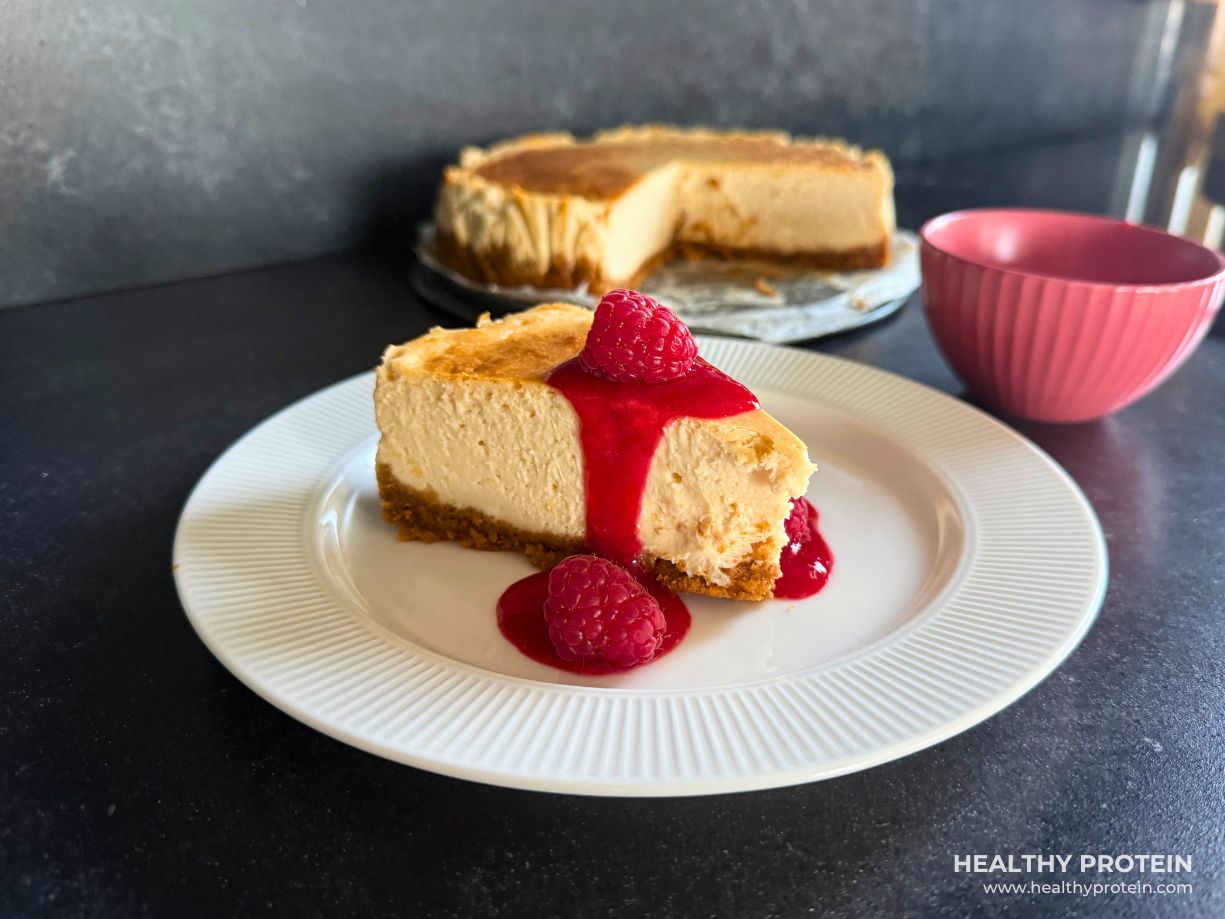
- Slice with a clean knife – Remove the cheesecake from the pan before serving. Cut it into slices using a sharp knife, cleaning the blade with warm water or a napkin between cuts.
Classic Cheesecake Nutrition (per serving / 1 slice)

Classic New York Cheesecake – Rich and Creamy
Ingredients
Biscuit Crust
- 220 g digestive biscuits (7.8 oz )
- 90 g butter, melted (3.2 oz )
- 30 g sugar (1.1 oz )
- A pinch of salt
Cheesecake Filling
- 800 g plain full-fat cream cheese (28.2 oz )
- 220 g full-fat sour cream (about 20% fat) (7.8 oz )
- 220 g sugar (7.8 oz )
- 4 eggs
- 20 g cornstarch (0.7 oz )
- 2 tsp vanilla extract or vanilla bean paste
- 1 tsp grated lemon zest
- 1 tbsp lemon juice
- A pinch of salt
Optional
- Berry sauce
- Fresh berries
Instructions
- Take the cream cheese, sour cream, and eggs out of the fridge at least 1–2 hours before starting so they can reach room temperature.
- Preheat the oven to 175 °C (350 °F).
- Line the base of a 22 cm (about 9-inch) springform pan with parchment paper.
- Crush the digestive biscuits into fine crumbs.
- Melt the butter in a saucepan over medium heat. For extra flavor, you can let it bubble gently until it begins to brown slightly.
- Mix the biscuit crumbs with the melted butter, sugar, and a pinch of salt.
- Press the mixture firmly into the base of the cake pan, and a little up the sides if you like.
- Bake the crust at 175 °C (350 °F) for about 10 minutes, then let it cool slightly.
- Reduce the oven temperature to 160 °C (320 °F).
- Wrap the outside of the base and sides of the springform pan with 2–3 layers of aluminum foil to keep water from getting inside if using a water bath. (The water bath is optional, but helps the cheesecake bake more evenly.)
- Mix the room-temperature cream cheese in a large bowl on low or medium speed until smooth and creamy. Use a mixer for these steps if possible.
- Add the sugar, sour cream, cornstarch, vanilla, lemon zest, lemon juice, and salt. Mix until smooth.
- Add the eggs one at a time, mixing just until each egg is fully combined with the filling.
- Pour the filling over the prebaked biscuit crust.
- Gently tap the pan on the countertop a few times to release larger air bubbles.
- Place the cake pan in a deep baking tray or roasting pan, and pour hot water into the outer pan until it reaches at least one-quarter of the height of the cake pan. (This water bath is optional, but produces a silkier, more evenly baked cheesecake.)
- Bake at 160 °C (320 °F) for approximately 70–80 minutes, until the edges are set but the center still wobbles slightly.
- Turn off the oven, open the door slightly, and leave the cheesecake to cool inside for at least 30 minutes.
- Carefully remove the cheesecake from the oven and allow it to cool completely to room temperature.
- Refrigerate the cheesecake for at least 6 hours, ideally overnight.
- Carefully remove the cheesecake from the springform pan.
- Slice the cheesecake with a sharp knife. For the cleanest slices, warm the blade in hot water before cutting, wipe it clean after each slice, and warm it again if needed.
- Serve with berry sauce or fresh berries if you like. Enjoy!
Nutrition (per serving)
Frequently Asked Questions
Tips on baking, cooling, and storing New York-style cheesecake.
Cheesecake can stay in the fridge for 3–4 days when covered and stored at 4 °C (40 °F) or below. Keep it in an airtight container or cover it tightly to prevent it from drying out or absorbing other food odors.
Yes, you can freeze cheesecake whole or in individual slices. Let it chill and set completely, then wrap it tightly and place it in a freezer-safe container. For the best quality, enjoy it within 1–2 months and thaw overnight in the fridge.
Cheesecake is done when the edges look set and the center still jiggles slightly when you gently move the pan. The middle should wobble gently rather than look liquid. It will continue to firm up as it cools, so avoid baking until the center is completely rigid.
Cheesecake can crack if the filling is overmixed, the cake is overbaked, or it cools too quickly. Mix gently, especially after adding the eggs, and stop baking while the center still has a slight wobble. A water bath and slow cooling in the switched-off oven can also help prevent cracks.